Fine Line Tattoos: From Prison Cells to Hollywood – The Full History
Fine Line Tattoos: From Prison Cells to Hollywood – The Full History

There is a fine line – roughly the width of a guitar string – between prison tattoos from 1960s Los Angeles and the trendy minimalist tattoos on celebrities like Hailey Bieber in today’s Hollywood.
A Fine Line Between Low and High
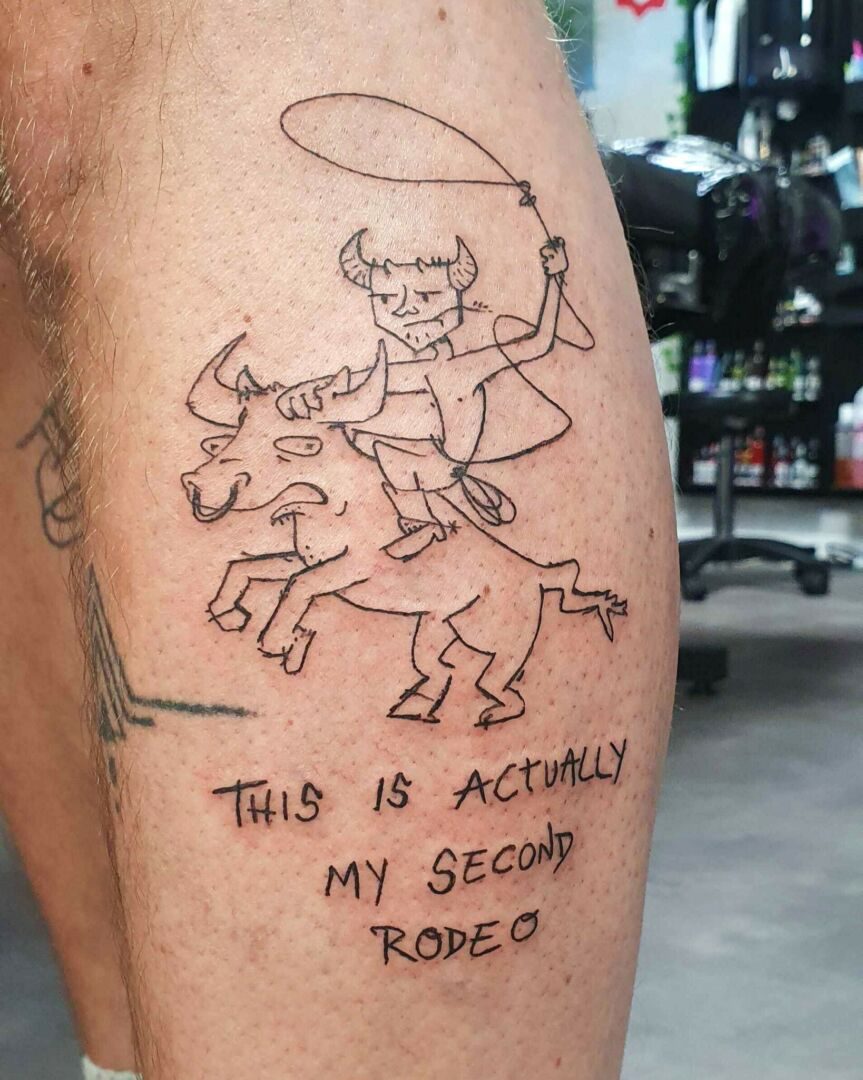
What originally referred to a technique has become an aesthetic in its own right. Small and delicate motifs with thin lines; a subtle heart, a name hidden on the inside of a wrist – you’ve seen them on celebrities and influencers. So subtle that they’re barely recognised as tattoos at first glance.
It’s called fine line, and it is one of the most dominant tattoo styles in modern times.
When people thought of tattoos they’ve long pictured thick, bold outlines, strong colours and eye-catching designs. Fine line tattoos go in the opposite direction; less is more. It’s about the subtle, the nearly invisible, the easily concealed. A fine line tattoo isn’t meant to shout – it’s meant to whisper.
The term and the style are associated today with luxury. With expensive micro-tattoos from Bang Bang Studio in New York, and subtle designs on celebrities by tattoo artists like Dr. Woo. What most people don’t know is that this millennial-coded style didn’t originate in a lucrative LA studio in the 2010s. It was invented in prison in the 1960s and 70s, by men who lacked access to professional equipment but had all the time in the world to perfect their craft.
READ MORE ABOUT ILLUSTRATIVE REALISM HERE
From Prison Cells to Hollywood
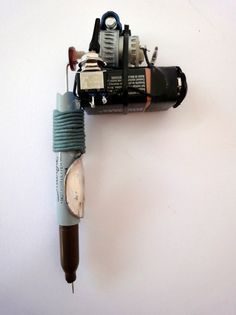
The history of what we today call fine line has its origins in the prison cells of Southern California in the 1960s and 70s. Bans on tattooing in prison stopped nobody. On the contrary, it encouraged inmates to get truly creative. They constructed their own tattooing tools and machines from whatever was available: electric razors, motors from cassette players, melted toothbrushes as holders and pens as tubes. They made needles by stretching guitar strings through pencil sharpeners and scrubbing them with sandpaper until they were sharp as needles. They made the ink themselves by burning plastic, styrofoam, vaseline-soaked toilet paper wicks, bible pages or baby oil – not for the material itself, but for the pure soot (carbon black) the flame deposited on a metal surface. The soot was scraped off and mixed with water and a binding agent such as shampoo or toothpaste. Some also used ink directly from pens, or India ink smuggled in by visitors. The result gave the tattoos a distinct greyish, washed-out colour that the style is still known for. Fine line was a result of what they had available, rather than a deliberate desire for a specific aesthetic.
Chicano Culture
The style grew out of Chicano culture in East LA. Chicano is an embrace of Mexican-American culture, an honouring of the heritage of two identities. The tattoo aesthetic was heavily influenced by cultural icons and Catholic imagery: the Virgin Mary, Jesus, crosses, roses, Aztec gods and lowrider cars. Inside prison, where everyone wore uniforms, tattoos became a way to show your background, loyalty, culture and identity: where you were from, and what you stood for.
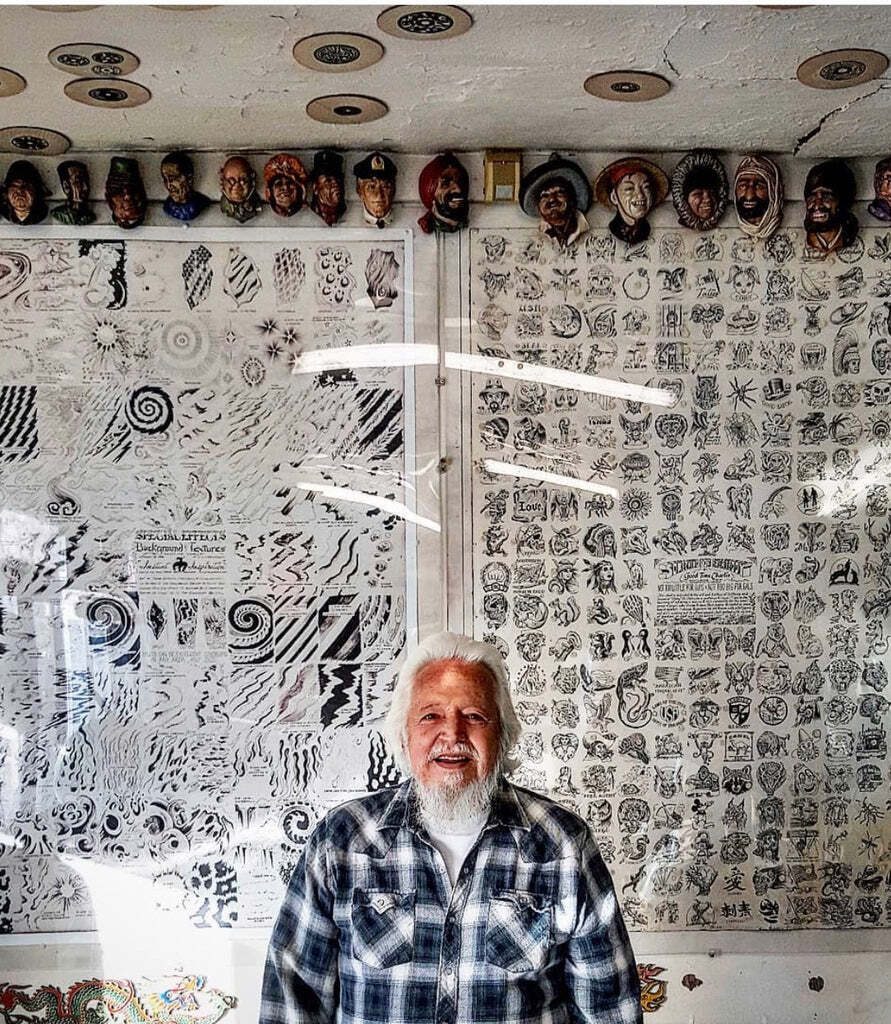
It was in this context that Freddy Negrete began tattooing. He was the son of a Jewish mother and a Mexican father, raised in LA and already a regular in juvenile detention from a young age. In a cell at Central Juvenile Hall in 1968, he met an older boy, a Chicano gang member, who taught him to tattoo with a needle stuck into a melted toothbrush, using mascara as ink. Negrete tattooed himself, then others, and from there it developed into an obsession. When he wasn’t locked up he drew, when he was locked up he tattooed. He was inside often enough to become a master.
Good Time Charlie’s
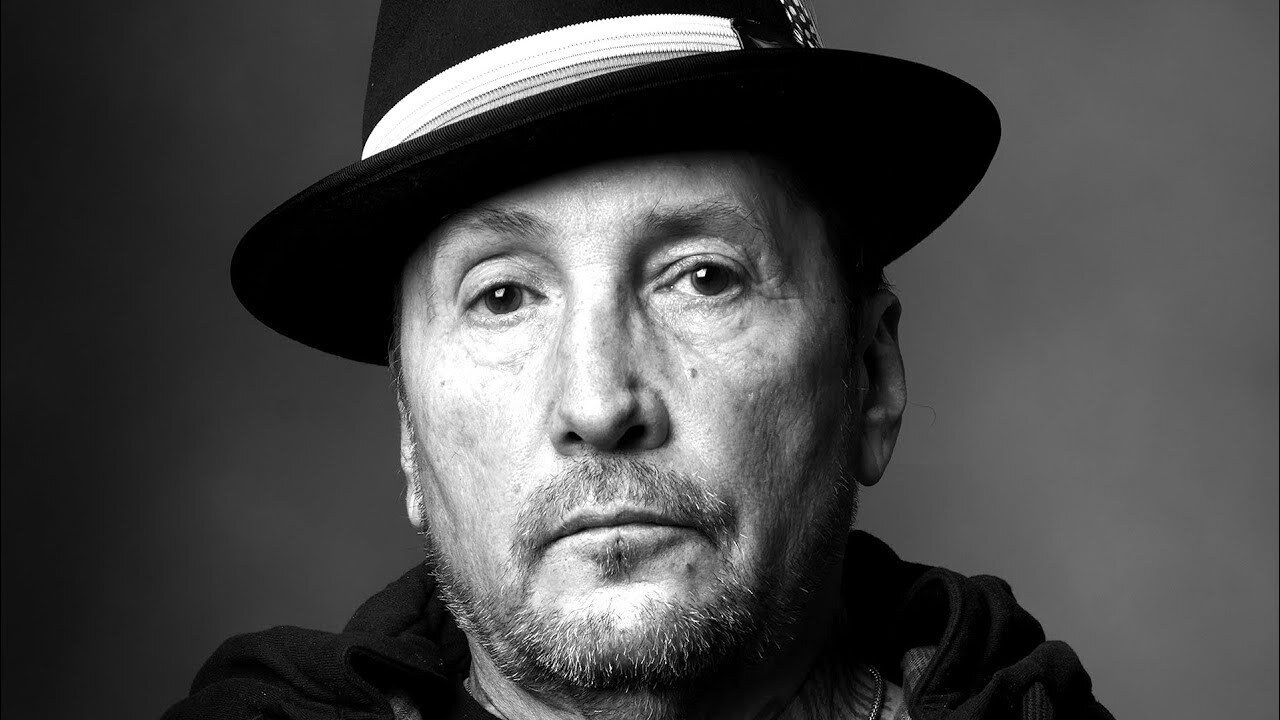
In 1975, biker Charlie Cartwright opened the tattoo studio “Good Time Charlie’s” together with Jack Rudy. The studio was located in East LA and had a primarily Mexican-American clientele who wanted “prison-style” tattoos. Cartwright and Rudy were themselves white and not part of Chicano culture, but they developed a tattoo machine that worked with just a single needle, and Good Time Charlie’s became the first professional tattoo studio to further develop what would come to be called fine line tattooing.
Freddy Negrete continued to tattoo even outside of prison, now from his apartment, and his designs spread to the walls of Good Time Charlie’s through shared clients. The first time Negrete visited Good Time Charlie’s he was met with cold shoulders, especially from Cartwright who at the time adhered to biker culture’s prejudiced codes. Negrete and Rudy, however, hit it off, which later led to Negrete being hired by Ed Hardy – yes, that Ed Hardy. Hardy bought the shop from Cartwright in the late 70s and knew from the start that they needed Negrete to be able to relate to the clientele.
Under their collaboration the style exploded, and Ed Hardy gave it a new name. Prison-style was too stigmatising. Fine line, on the other hand, was a name that could be sold – and reach far.
Fine Line as Technique
You may have heard the terms fine line and single-needle tattoo thrown around. They are essentially the same thing, and the logic behind single-needle – a single guitar string, a single needle – is that the thinner the lines, the more realistic images one could create. With one needle, the inmates could create portraits, religious icons and intricate text in lifelike realism. Something quite different from traditional tattoos’ thick lines, use of colour and simplified designs.
Fine line is a tattoo technique that uses the very thinnest needles to create delicate, precise designs. Tattoo artists today use a combination of one or more thin needles to create contrast between super-thin and slightly bolder lines, adding depth and life to the designs.
Fine line is a seemingly simple technique, but the thin lines require an extremely steady hand, good knowledge of how ink transfers to skin, and perfect control over thickness and depth. Too little depth and the tattoo fades over the years, too much and you get a “blow out” where the ink spreads in the tissue and what was meant to be a thin line becomes an unclear blob. A good fine line artist works within a half-millimetre margin of error.
Artists like Jack Rudy spent decades calibrating their own machines to achieve the finest, most stable lines.
There is still debate over what can be classified as “true” fine line. Purists maintain that fine line equals single needle – meaning just one needle – and that it is a technique rather than a style. After all, you can tattoo virtually any motif with fine line, and while it gives the tattoos a distinct look, it can encompass everything from traditional motifs, photorealism, calligraphy and more.
Others argue that fine line as a style category is a label for all delicate line work, regardless of whether one or more needles are used. In practice, the definitions blur into each other, and for most people it refers to the style, not the technique. When people on the street hear “fine line” they think of small, delicate celebrity tattoos.

Why Now?
The style had existed since the 60s, when it was associated with prison inmates, gang members, Chicano culture, bikers and other social outcasts. Now the style is the hottest fashion. What happened? Minimalism. Less is more, and fine line was one of the few tattoo styles that could deliver this if someone wanted to adorn their body with permanent art. Traditional tattoos didn’t fit into the Marie Kondo, Scandinavian design, clean girl and Muji aesthetic. People wanted less, but finer things.
You could have dozens of fine line tattoos without looking heavily tattooed. You could hide them with a t-shirt or jumper at family gatherings at grandma’s and show them off in the park and at bars the next day.
Longevity: The Great Debate
The issue many raise with fine line is that the tattoos fade faster than traditional tattoos. Thinner needles deposit less ink, and less ink means faster loss of pigment, especially in areas with a lot of friction and places exposed to a lot of sunlight. A traditional tattoo can look nearly as good after thirty years, while a fine line tattoo may need a touch-up after just five to ten years. Critics argue that today’s fine line customers are going to become regulars for touch-ups and laser removal in the future. Supporters respond: is that really a problem? If the tattoo is small and easy to modify over the years, what’s wrong with getting a tattoo that evolves with you, rather than remaining an eternal expression of the time you got it?
Fine line perhaps represents a shift from tattoos as a lifelong commitment to tattoos as a statement for life’s seasons. Not forever, but for now.
READ MORE ABOUT TAKING CARE OF YOUR TATTOO HERE

The Gentrification of Chicano Culture
The criticism of cultural appropriation directed at 90s tribal is so strong that even modern styles like cybersigilism cannot escape accusations, even though it is usually pure association, not actual overlap between the two styles. Fine line has achieved the complete opposite. It has effectively erased its past from public memory. From “prison style” to “Chicano style” to “West Coast style”, to the neutral and marketable “fine line”. With each name change, a little more of the culture was washed away, until nothing remained.
Fine line IS Chicano culture, but the style developed by creative jailbirds in the 60s and 70s is nearly unrecognisable when it appears on Hailey Bieber’s wrist.

Gen Z Fights Back
By 2026, the counterculture against minimalist fine line has gained its footing and Gen Z, who grew up surrounded by minimalism, have increasingly moved towards maximalism. They have adopted cybersigilism, stick and poke, trash polka and other more distinctive styles. Fine line, however, is not about to disappear. It is now an established style and technique, but it is no longer the defining trend in the West.
Fine line is a global phenomenon. With the exception of traditional tattooing, whose roots run deepest, no other style is practised to the same degree across all borders.
Studios in Seoul and Tokyo produce the same motifs as studios in Oslo and Stockholm.
In South Korea, where it was illegal until 2025 to tattoo without a medical licence, tattoo artists like Doy (@tattooist_doy) report that 70% of their clientele are women who want minimalist and delicate designs. In Japan, where the stigma around tattoos is still linked to criminality, fine line has become the accepted style embraced by the younger generations – precisely because it can be hidden.
In Europe, fine line is the dominant style for first-time customers.
Fine line as both technique and style is here to stay. It has fundamentally changed tattoo art as we know it, and has changed how we think about art on the body. Tattoos used to be a major commitment. Something massive and conspicuous that decorated the skin forever. Fine line opened the door to letting tattoos become collectibles; small moments, thoughts and symbols from life’s journey, built over time, flexible enough to add to once more next year.
As a technique it has revolutionised what a tattoo artist can do: from a simple line on the wrist to a photorealistic portrait of Aragorn on the arm – everything bears traces of Freddy Negrete, Good Time Charlie’s and Chicano culture. Constraint fosters creativity, and creativity meeting culture becomes a style in perpetual evolution. It will be exciting to see where fine line is, culturally, twenty to forty years from now.
Artikkelen er skrevet av Stine Dahlmo.
Kildehenvisning: https://www.grumpysartcompany.com/post/understanding-concept-tattoo-styles
https://www.goodtimecharlie.net/pages/about